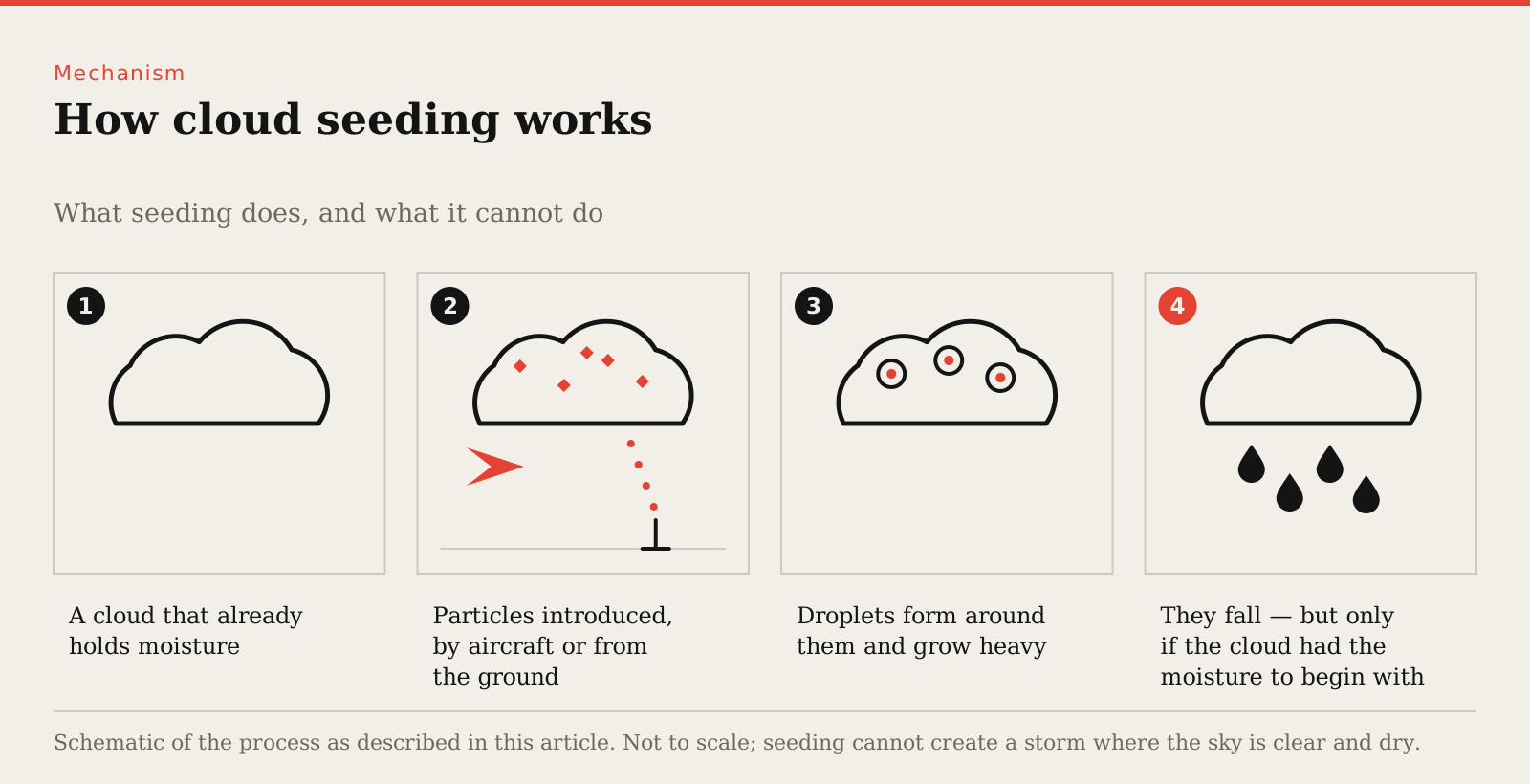
Cloud seeding works by adding tiny particles to clouds that already hold moisture, giving water droplets something to form around so they grow heavy enough to fall. It cannot conjure a storm where the sky is clear and dry. What began as a fringe experiment in the mid-twentieth century has become national policy in several countries, offered almost as a service to fill reservoirs and support farming.
The question that follows the technology everywhere is how much it actually delivers, and who bears the cost when one place pulls water out of a sky that others share.
How seeding works
A cloud can hold a great deal of water and still not rain, because the droplets are too small and light to fall. Seeding introduces particles, often silver iodide1, that act as nuclei, points around which droplets or ice crystals can gather until they are heavy enough to drop.
The crucial limit is that the moisture must already be there. Seeding nudges a cloud that is close to raining into actually doing so. It does nothing for a clear sky, which is why it is a tool for coaxing more from existing weather, not for making weather from nothing.
From experiment to policy
The technique dates to the 1940s2, when researchers first showed that seeding a cloud could trigger precipitation. For decades it carried a whiff of the fringe, promising more than it could clearly prove and attracting as much skepticism as investment.
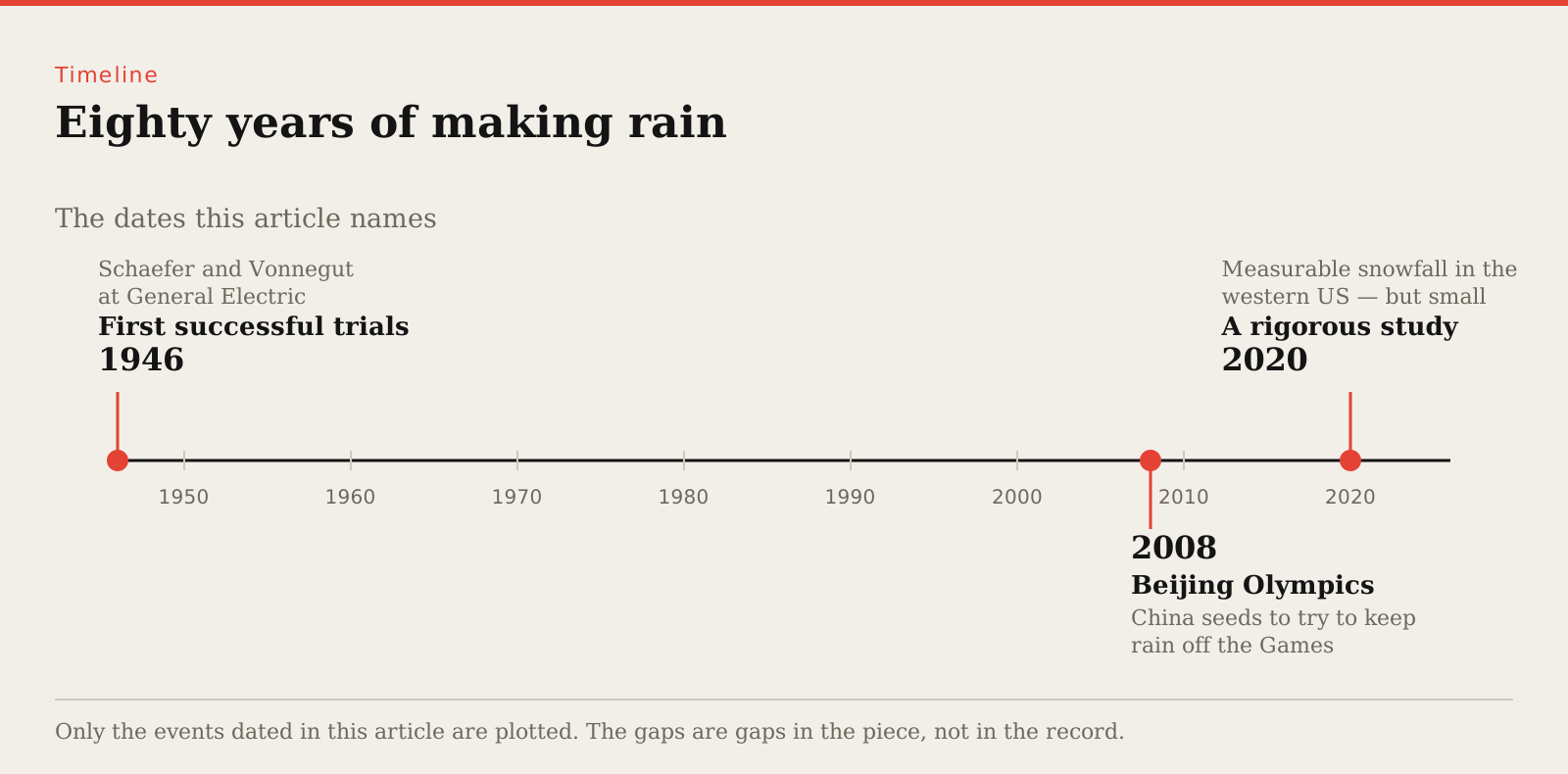
Over time, as water grew scarcer and the methods improved, governments began to treat it as serious infrastructure. What was once an experiment run by a few enthusiasts is now a line item in the water strategy of several large countries.
Who does it now
Cloud seeding programs run today across the western United States, the Middle East, and Asia3, aimed at filling reservoirs, boosting mountain snowpack4, and supporting agriculture through dry seasons. Some are modest and local; others are national efforts with sustained budgets.
The scale of the ambition varies widely, but the direction is consistent. Places under water stress are increasingly willing to spend on any method that might squeeze a little more out of the sky, and seeding is the most established of them.
The question of scale
The open question is how much extra water a program actually produces. Rain is variable, and separating the effect of seeding from what would have fallen anyway is genuinely hard5, which leaves the true yield of many programs uncertain even after decades of use.
That uncertainty matters because the spending is real and rising. A tool whose benefit is difficult to measure invites both over-promising by its advocates and dismissal by its critics, and the truth usually sits somewhere in between, modest but not nothing.
Who owns the sky
Pulling moisture down in one place may mean less of it somewhere downwind.6 That turns a technical tool into a question of ownership, because the water in a passing weather system does not belong to whoever seeds it first, and neighbors may reasonably object.
As more governments reach for the technique, the potential for disputes grows. Weather does not respect borders, and a tool that lets one region draw on a shared resource will eventually force the question of who has the right to the rain.